Wednesday, August 17, 2011

Nokia N9

All it takes is a swipe

Introducing the beautiful Nokia N9

Now everything's just a swipe away

 A beautifully simple all-screen smartphone.


Beautifully simple

Nokia N9 – a bold, all-screen phone that's incredibly fast and simple to use. All it takes is a swipe.

Endless possibilities

The swipe has made our best features even better and easier to use, so you can get straight to the important things.


Just a swipe away

“We wanted to design a better way to use a phone, and it comes down to one simple gesture – a swipe.”


Design

Beautifully simple


Nokia N9 – a bold, all-screen phone that's incredibly fast and simple to use. All it takes is a swipe.

Wednesday, July 20, 2011

Android

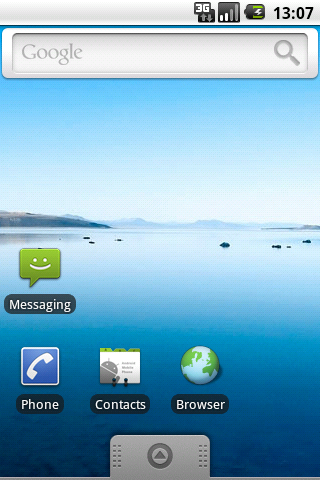
The Android Emulator default home screen (v1.5)


Android is a software stack for mobile devices that includes an operating system, middleware and key applications. Google Inc. purchased the initial developer of the software, Android Inc., in 2005.Android's mobile operating system is based on the Linux. The Android Open Source Project (AOSP) is tasked with the maintenance and further development of Android. Android was listed as the best-selling Smartphone platform world-wide in Q4 2010.

Android has a large community of developers writing applications ("apps") that extend the functionality of the devices. There are currently more than 250,000 apps available for Android.


Version history


Android has seen a number of updates since its original release. These updates to the base operating system typically fix bugs and add new features. Generally, each new version of the Android operating system is developed under a code name based on a dessert item. Past updates included Cupcake and Donut. The code names are in alphabetical order (Cupcake, Donut, Eclair, Froyo, Gingerbread, Honeycomb, and the upcoming Ice Cream Sandwich). Below is a list of the most recent versions, and what they include:

    2.0 (Eclair) included a new web browser, with a new user interface and support for HTML5 and the W3C Geolocation API. It also included an enhanced camera app with features like digital zoom, flash, color effects, and more.

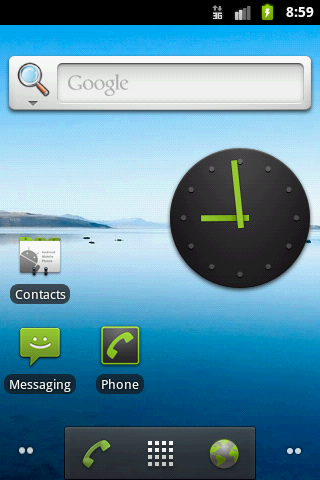
    2.1 (Eclair) included support for voice controls throughout the entire OS. It also included a new launcher, with 5 homescreens instead of 3, animated backgrounds, and a button to open the menu (instead of a slider). It also included a new weather app, and improved functionality in the Email and Phonebook apps.

    2.2 (Froyo) introduced speed improvements with JIT optimization and the Chrome V8 JavaScript engine, and added Wi-Fi hotspot tethering and Adobe Flash support

    2.3 (Gingerbread) refined the user interface, improved the soft keyboard and copy/paste features, and added support for Near Field Communication

    3.0 (Honeycomb) was a tablet-oriented release which supports larger screen devices and introduces many new user interface features, and supports multicore processors and hardware acceleration for graphics. The Honeycomb SDK has been released and the first device featuring this version, the Motorola Xoom tablet, went on sale in February 2011.

    3.1 (Honeycomb) was announced at the 2011 Google I/O on 10 May 2011.

    3.2 (Honeycomb) is "an incremental release that adds several new capabilities for users and developers." Highlights include optimization for a broader range of screen sizes; new "zoom-to-fill" screen compatibility mode; capability to load media files directly from the SD card; and an extended screen support API, providing developers with more precise control over the UI.

Below is a list of future releases that have been announced:

    4.0 (Ice Cream Sandwich) is said to be a combination of Gingerbread and Honeycomb into a "cohesive whole." It will be released in Q4 2011.


Handset layouts The platform is adaptable to larger, VGA, 2D graphics library, 3D graphics library based on OpenGL ES 2.0 specifications, and traditional smartphone layouts.
Storage SQLite, a lightweight relational database, is used for data storage purposes
Connectivity Android supports connectivity technologies including GSM/EDGE, IDEN, CDMA, EV-DO, UMTS, Bluetooth, Wi-Fi (no connections through Proxy server[62] and no Ad hoc wireless network), LTE, NFC and WiMAX.
Messaging SMS and MMS are available forms of messaging, including threaded text messaging and now Android Cloud To Device Messaging Framework(C2DM) is also a part of Android Push Messaging service.
Multiple language support Android supports multiple human languages. The number of languages more than doubled for the platform 2.3 Gingerbread. Android lacks font rendering of several languages even after official announcements of added support (e.g. Hindi).
Web browser The web browser available in Android is based on the open-source WebKit layout engine, coupled with Chrome's V8 JavaScript engine. The browser scores a 93/100 on the Acid3 Test.
Java support While most Android applications are written in Java, there is no Java Virtual Machine in the platform and Java byte code is not executed. Java classes are compiled into Dalvik executables and run on Dalvik, a specialized virtual machine designed specifically for Android and optimized for battery-powered mobile devices with limited memory and CPU. J2ME support can be provided via third-party applications.
Media support Android supports the following audio/video/still media formats: WebM, H.263, H.264 (in 3GP or MP4 container), MPEG-4 SP, AMR, AMR-WB (in 3GP container), AAC, HE-AAC (in MP4 or 3GP container), MP3, MIDI, Ogg Vorbis, FLAC, WAV, JPEG, PNG, GIF (though earlier versions do not support animated GIFs), BMP.
Streaming media support RTP/RTSP streaming (3GPP PSS, ISMA), HTML progressive download (HTML5 <video> tag). Adobe Flash Streaming (RTMP) and HTTP Dynamic Streaming are supported by the Flash plugin. Apple HTTP Live Streaming is supported by RealPlayer for Mobile, and by the operating system in Android 3.0 (Honeycomb). Microsoft Smooth Streaming is planned to be supported through the awaited port of Silverlight plugin to Android.
Additional hardware support Android can use video/still cameras, touchscreens, GPS, accelerometers, gyroscopes, magnetometers, dedicated gaming controls, proximity and pressure sensors, thermometers, accelerated 2D bit blits (with hardware orientation, scaling, pixel format conversion) and accelerated 3D graphics.
Multi-touch Android has native support for multi-touch which was initially made available in handsets such as the HTC Hero. The feature was originally disabled at the kernel level (possibly to avoid infringing Apple's patents on touch-screen technology at the time). Google has since released an update for the Nexus One and the Motorola Droid which enables multi-touch natively.[68]
Bluetooth Supports A2DP, AVRCP, sending files (OPP), accessing the phone book (PBAP), voice dialing and sending contacts between phones. Keyboard, mouse and joystick (HID) support is available through manufacturer customizations and third-party applications. Full HID support is planned for Android 3.0 (Honeycomb).
Video calling Android does not support native video calling, but some handsets have a customized version of the operating system that supports it, either via the UMTS network (like the Samsung Galaxy S) or over IP. Video calling through Google Talk is available in Android 2.3.4 and later.
Multitasking Multitasking of applications is available.
Voice based features Google search through voice has been available since initial release. Voice actions for calling, texting, navigation, etc. are supported on Android 2.2 onwards.
Tethering Android supports tethering, which allows a phone to be used as a wireless/wired hotspot. Before Android 2.2 this was supported by third-party applications or manufacturer customizations.
Screen capture Android does not support screenshot capture as of 2011. This is supported by manufacturer and third-party customizations.

Sunday, June 19, 2011

iPhone 4

While everyone else was busy trying to keep up with iPhone, we were busy creating amazing new features that make iPhone more powerful, easier to use, and more indispensable than ever. The result is iPhone 4. The biggest thing to happen to iPhone since iPhone.


FaceTime


People have been dreaming about video calling for decades. iPhone 4 makes it a reality. With just a tap, you can wave hello to your kids, share a smile from across the globe, or watch your best friend laugh at your stories — iPhone 4 to iPhone 4 or to the new iPod touch over Wi-Fi. And it works right out of the box. No other phone makes staying in touch this much fun.


The Retina display on iPhone 4 is the sharpest, most vibrant, highest-resolution phone screen ever, with four times the pixel count of previous iPhone models. In fact, the pixel density is so high that the human eye is unable to distinguish individual pixels. Which makes text amazingly crisp and images stunningly sharp.


Multitasking


iPhone 4 introduces a whole new way of multitasking. Now you can run your favorite third-party apps — and switch between them instantly — without slowing down the performance of the foreground app or draining the battery unnecessarily.1 This smarter approach to multitasking is available only in iOS 4.


HD Video Recording and Editing


Shoot your own movies in high definition. Capture impressive video even in low-light settings, thanks to the advanced backside illumination sensor and built-in LED light. Then edit and create your own mini-masterpiece right on iPhone 4 using the iMovie app — with Apple-designed themes, titles, and transitions. It’s available on the App Store for $4.99.


5-Megapixel Camera with LED Flash


Take beautiful, detailed photos using the 5-megapixel camera with built-in LED flash. The advanced backside illumination sensor captures great pictures even in low light. And the front-facing camera makes it easy to take self-portraits.

Tuesday, May 31, 2011

iPhone 5


Now the iPhone 5 rumors are flying fast and furious, with June, the typical launch window for next-generation iPhones, quickly approaching. Will the iPhone 5 have a completely new design or just be a slightly modified version of the iPhone 4 with enhanced parts and various tweaks? Will the launch be delayed until fall, as several reports are now suggesting? Will there be a smaller, lower-cost iPhone?


iPhone 5: most-wanted features

4G network compatible

The one big thing missing from the iPhone 4 is the lack of next-gen 4G data network support, which is probably why Apple called it the 4 instead of the 4G.
AT&T will reportedly have a 4G network up and running in 2011, whereas Sprint has already rolled out its next-gen network. Verizon has also deployed its 4G network, which currently works with one phone, the HTC Thunderbolt (the data speeds are impressive). However, the Verizon iPhone 4 doesn't support 4G data.
Many don't believe Apple will include "true" 4G data support in the next iPhone 5, mainly because using 4G data networks are taxing on battery life. However, if Apple decides to delay the iPhone 5's launch date until the fall, the odds increase that it will make the iPhone 5 a true 4G phone.
Chances of implementation: 50 percent


iOS 5


What new features will iOS 5 bring? Who knows, but we look forward to its arrival.
Chances of implementation: 100 percent


Better battery life


Every time Apple puts out a new iPhone, the battery life gets better, so we expect no less from the fifth-generation iPhone. Apple says the iPhone 4 has 40 percent more talk time than the iPhone 3GS. So, if the past is any indicator, we might see similar gains in next year's model.
Chances of implementation: 90 percent


Larger screen
Rumors continue to surface that Apple will be expanding the size of its iPhone screen to compete with the larger screens on Android smartphones.
From our polling on CNET, we've found that a clear majority of our readers want a larger screen. However, they don't want the iPhone to get any bigger or lose any battery life.
We're hoping Apple can come up with the right balance, but as you can see from this mock-up, going to 4 inches makes a significant difference and is probably the optimal size for a smartphone screen.
Chances of implementation: 50 percent


 Dual-core processor

With Apple's acquisition of PA Semiconductor, it's started designing and churning out its own CPUs, including the new 1GHz A5 dual-core processor that's in the iPad 2. That same processor will almost assuredly make its way into the next iPhone. (The iPhone has an A4 processor that also runs at 1GHz, but the A4 has a single-core architecture).
It's worth mentioning that LG, Motorola, and others have already released dual-core Android phones.
Chances of implementation: 100 percent


Better camera

We certainly appreciate that Apple improved the camera in the iPhone 4 (5 megapixels; LED flash), but we've seen rumors that Sony is developing an even better 8-megapixel camera for the fifth-gen iPhone.
Chances of implementation: 95 percent


Video chat (FaceTime) over cellular network

Currently, on the iPhone 4, FaceTime only works over Wi-Fi (yes, there are some workarounds to get it to work over 3G, but Apple doesn't officially support it). We'd like to see an option to use it over a cellular data network, and hope it's supported when AT&T's faster 4G network ramps up in 2011.